Gordina Journal
La Bailarina
From a New Mexico Painted Chest to Embroidery
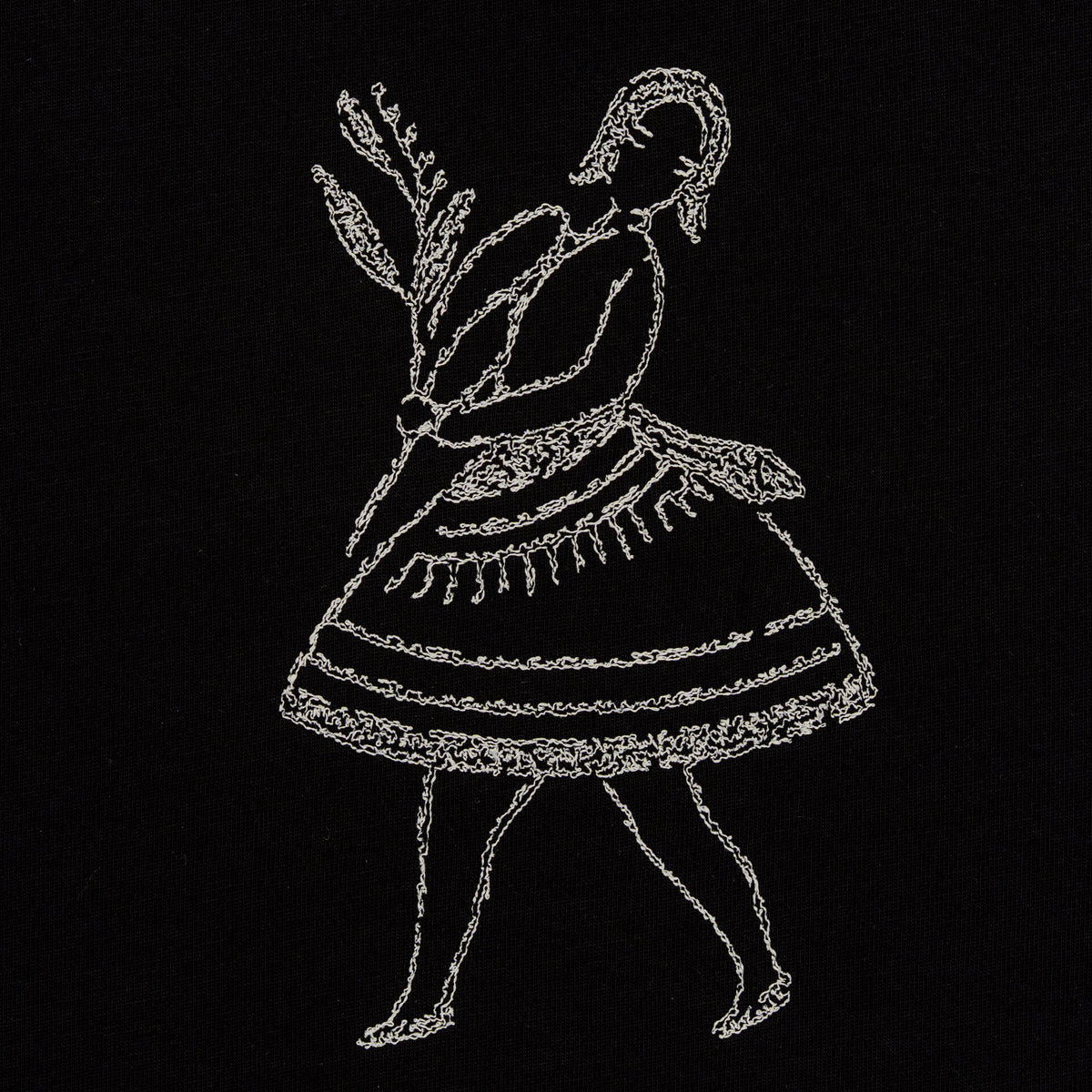
La Bailarina begins with a painted chest design preserved in the National Gallery of Art’s Index of American Design. Gordina isolates one dancing figure and translates its movement into embroidery.
La Bailarina begins with an archival image: a painted chest design from New Mexico, preserved in a twentieth-century portfolio of Spanish Colonial designs. The scene brings together a horse, flowers and figures in motion. One of those figures became the visual starting point for Gordina’s dancing motif.
The archival source
The reference comes from Plate 42: Painted Chest Design, part of the portfolio Spanish Colonial Designs of New Mexico. The National Gallery of Art holds the sheet within the Index of American Design, a large visual archive created during the Great Depression to document American folk and decorative arts.
The print itself dates from 1935–1942 and is a screenprint on paper. That date belongs to the twentieth-century record, not necessarily to the original painted chest it documents. Gordina therefore treats the sheet as an archival representation of an earlier decorative object rather than assigning an unsupported date to the chest itself.

The Index of American Design
The Index of American Design was created as part of the Works Progress Administration’s Federal Art Project. More than 18,000 renderings were produced to record American folk, decorative and industrial objects, many of them handmade and regionally distinctive.
These images are valuable records, but they are also products of their own time. They document selected objects through another artist’s hand, another medium and another historical framework. For Gordina, that distance matters. La Bailarina does not claim to reproduce the original chest decoration exactly; it responds to a figure as encountered through this archival image.
A figure in motion
What drew us in was movement.
The figure is small within the larger composition, surrounded by flowers, another person and a horse. Yet the gesture is unmistakable: the body bends, the skirt flares and the pose feels animated despite the stillness of the print.
La Bailarina — “the dancer” — takes that sense of movement as its centre. The embroidery isolates the figure from the surrounding scene and gives it space to stand on its own.

From painted surface to embroidered line
The source image belongs to a painted decorative object. Gordina translates that visual language into another material entirely: thread on cotton.
That change simplifies the figure. Colour fields become line. Painted movement becomes stitched contour. The open fabric around the motif allows the dancer’s gesture to remain legible without recreating the whole source composition.
What survives is not the chest scene as a whole, but the energy of one figure.

Three colourways, one gesture
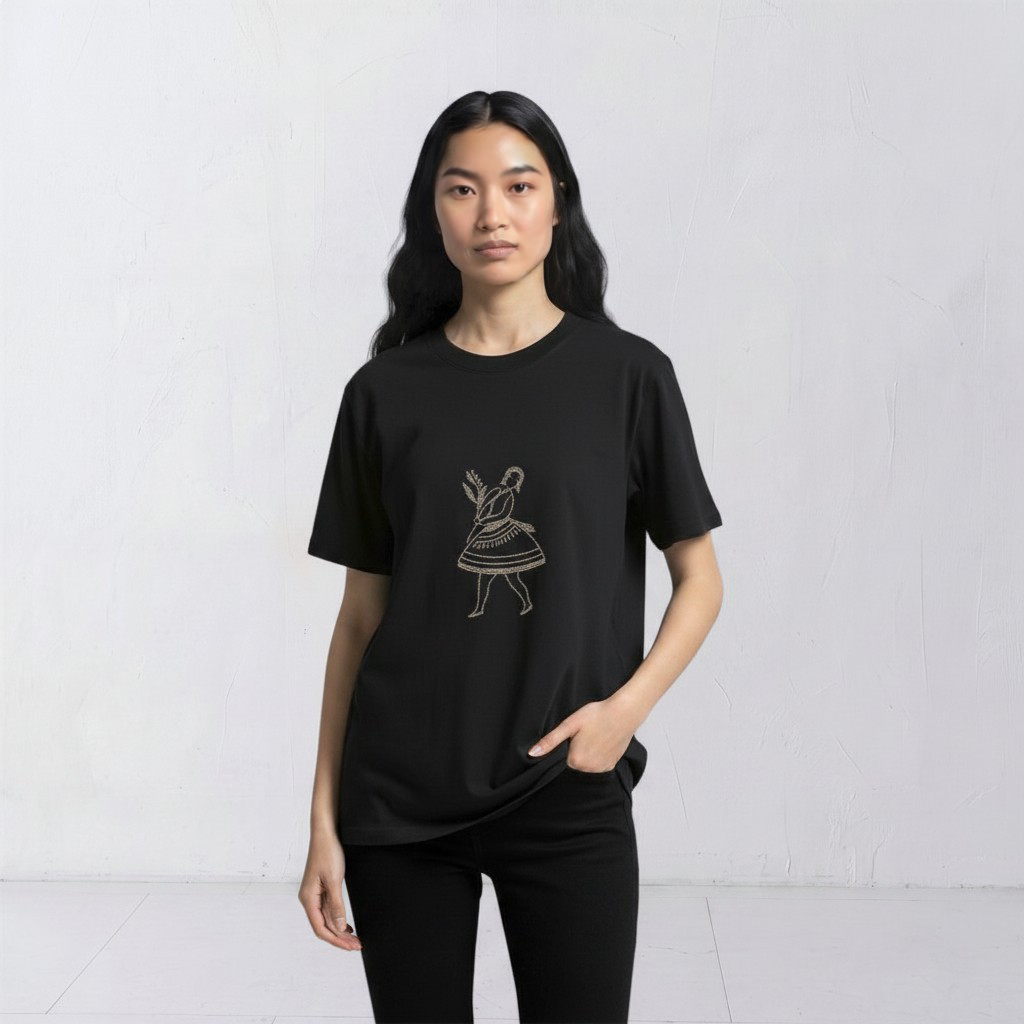
The motif appears across Black, Terracotta and Powder cotton. Each colour changes the balance between thread and garment, but the dancer’s pose remains the same.
On Black, cream thread gives the figure strong contrast. On Terracotta, dark thread makes the motif quieter and more integrated. On Powder, burgundy thread gives the dancer a warmer, graphic presence.

Why the story matters
Showing the source is part of the design story. It makes clear that La Bailarina began with an archival encounter rather than with a generic dancer image.
At the same time, the archival record has limits. The National Gallery sheet documents a painted chest design through a twentieth-century screenprint. Gordina does not claim a direct line of authorship from the original object to the garment, nor do we assign meanings that are not documented by the museum record.
What we carry forward is visual: a figure, a gesture and a sense of movement.
A dancer carried into thread
La Bailarina takes one small figure from a richly decorated archival image and gives it a new scale, surface and context.
The chest remains in the archive. The dancer moves on.