Gordina Journal
The Papyrus
The Shape of a Fragment
The Papyrus begins with an incomplete writing surface: marks, gaps and edges that suggest a larger text beyond what remains. Gordina translates that visual rhythm from papyrus into embroidery.
The Papyrus begins with the appearance of a fragment: an incomplete surface carrying marks, breaks and the sense that a larger text once continued beyond the edge.
Ancient Egyptian papyrus was a writing material made from strips cut from the pith of the papyrus plant, layered, pressed and dried into sheets. Surviving papyri preserve letters, accounts, religious texts and many other forms of written record. For Gordina, that material history provides context for the design — but the embroidery is not presented as a literal transcription of a specific museum document.
A surface for writing
Papyrus turned plant material into a portable writing surface. Inked signs could carry administrative records, correspondence, ritual texts and literature, while the material itself recorded folds, wear, tears and missing sections over time.
That physical quality matters to The Papyrus. The design is drawn not only to the idea of writing, but to the visual condition of a fragment: some marks remain, others are interrupted, and the empty areas become part of what we see.

The shape of a fragment
A complete page encourages the eye to read across a whole surface. A fragment does something different. It asks the viewer to notice edges, gaps and interruptions.
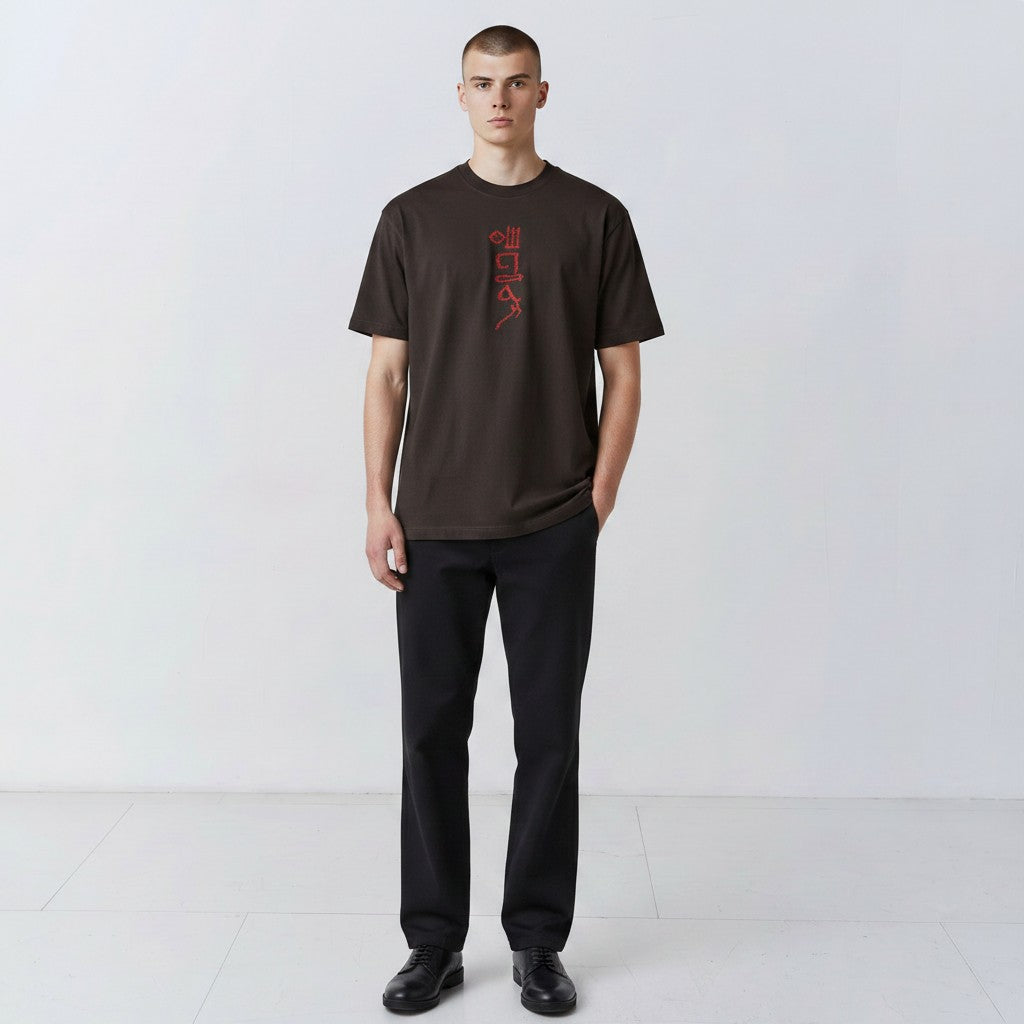
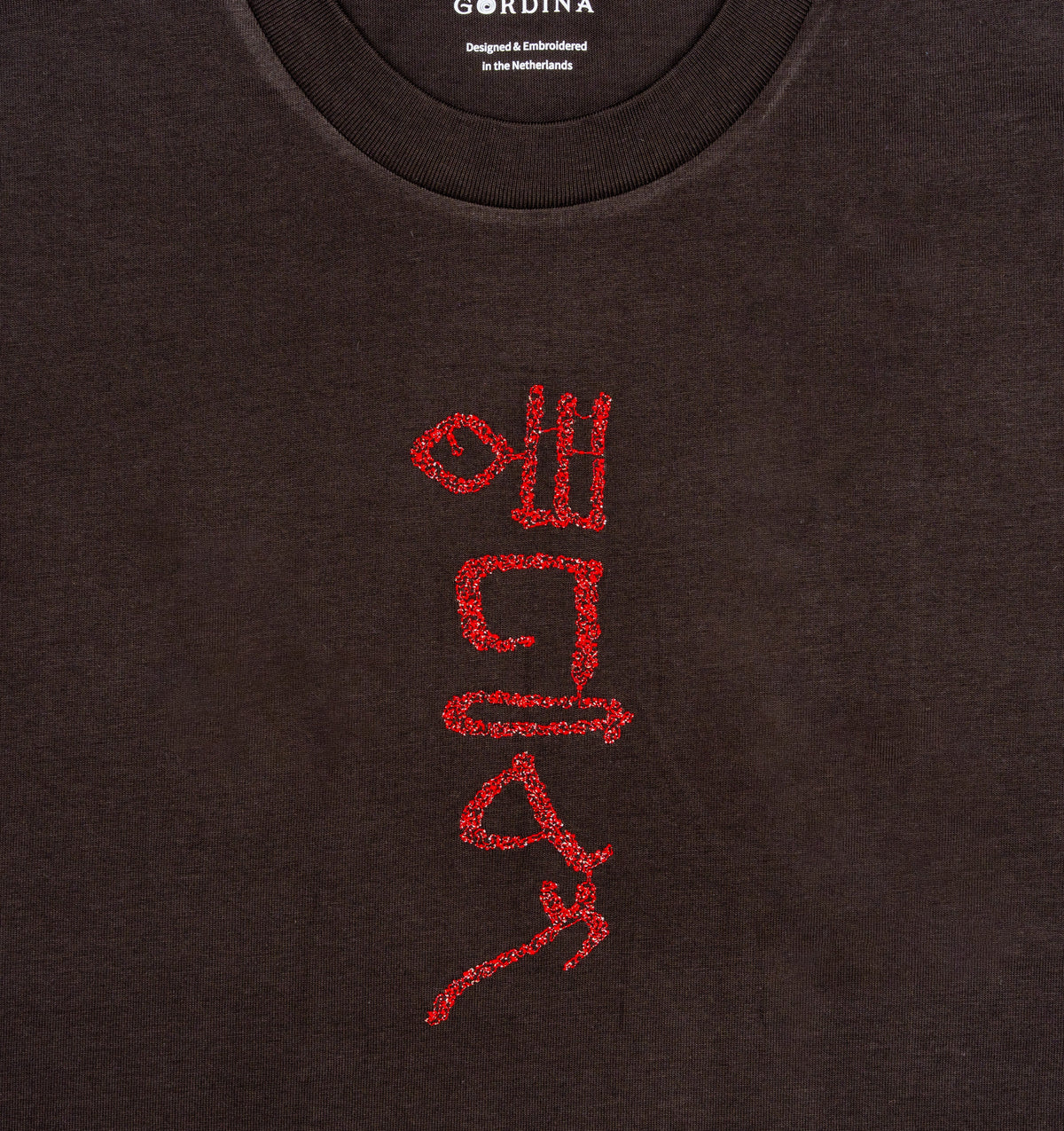
In The Papyrus, incompleteness becomes part of the composition. A vertical group of signs is separated by visible cotton, so each stitched form can be read independently while still belonging to a larger sequence.
The design does not assign a translation to these embroidered marks. Their role is visual rather than philological: line, interval, direction and rhythm.

From papyrus to cotton
Changing the material changes the experience of the motif. Ink on a papyrus sheet becomes raised thread on a garment. A flat historical writing surface becomes something tactile and worn close to the body.
On the Coal T-shirt, the motif appears at the chest in red thread. On the Navy and Bone versions, it sits vertically on the upper back. The same visual idea shifts with colour, contrast and placement.

Marks, gaps, and what remains
Historical fragments are compelling partly because they show survival and loss at the same time. What remains can be studied; what is missing must not be invented.
That distinction is important to Gordina’s approach. The exact papyrus reference behind this design has not been independently identified by date, author or museum accession. The article therefore uses museum material to explain papyrus as a historical writing surface, not to claim that a specific museum object is the direct source of the embroidery.
The visual idea is simpler: marks remain, the edge interrupts them, and the surrounding space becomes active.

A fragment carried forward
At Gordina, the interest is not in recreating an ancient document. It is in translating the visual memory of a fragment into another material language.
The Papyrus carries that idea from plant fibre and ink to cotton and thread. The surface changes, but the relationship between mark, gap and edge remains central.